SFCM Helps Nadia Boulanger's Forgotten Masterpiece Come to Life
Composition Chair David Conte, a former student of Boulanger's, led the orchestration on 'La Villa Morte' out now on SFCM's label partner PENTATONE records.

"La ville morte" cover art by by Sophie Von Hellermann.
A musical work silenced for more than a century has now been given new life.
Nadia Boulanger is known as one of the 20th century's most influential music teachers, but her creative voice as a composer has recently been rediscovered in La ville morte (The Dead City), a haunting opera of passion, loss, and psychological intensity.
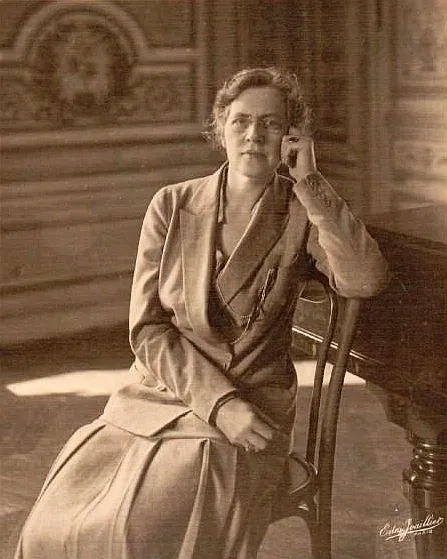
Nadia Boulanger.
Based on a libretto by Gabriele D'Annunzio, the work was originally planned for its world premiere in Paris in 1914, but the outbreak of World War I silenced it before it could be heard.
Now, decades later, the long-buried score rises from obscurity, a revived opera where forgotten desires return to life against the backdrop of ancient ruins. La ville Morte is out now on SFCM's lauded partner Pentatone Records, with a physical release planned for later this year. It features artists Melissa Harvey, Laurie Rubin, and Joshua Dennis, among others.
SFCM's Composition Chair David Conte oversaw the orchestration of La ville morte, a special creative opportunity for Conte, who studied with Boulanger near the end of her life. "In 2020, Neal Goren, visionary director of Catapult Opera in New York, approached me about doing an orchestration from Nadia’s piano vocal score for a chamber ensemble of 11 instruments," Conte said. "I suggested that he (also) engage two of my former students Joseph Stillwell and Stefan Cwik, to undertake this project."
Under the leadership of CEO Sean Hickey, Pentatone, part of SFCM's growing alliance of industry partners, is proud to resurface this side of Boulanger's artistry, sometimes overshadowed by her iconic career as an educator. "Thanks to the advocacy of Catapult Opera and its founder, Neal Goren, La Ville Morte—composed in collaboration with Raoul Pugno—places Boulanger among the ranks of composers whose work was interrupted and nearly destroyed by war," Hickey said. "We are honored to share this extraordinary operatic milestone, reconstructed more than a century later and performed and recorded for the very first time with a stellar cast."
Conte remembers his first lesson with Boulanger. "I played one of my compositions at the piano for her, and she said to me, 'Well, you're born to compose.' Now, she didn't say that I was a great composer, but she said, 'An apple tree produces apples; you will produce music.' So by the end of that first lesson, I felt welcomed by her into the fraternity of musicians. For a 19-year-old, it was a very important validating experience."
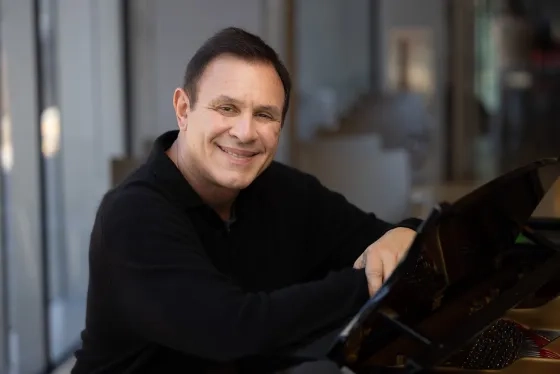
Composition Chair David Conte.
SFCM's Composition department both honors tradition and encourages innovation. Faculty members closely mentor students while maintaining their own high-profile composing careers. It strongly emphasizes interdepartmental collaboration by matching composers with performers, as well as offering frequent concerts and readings of student works.
Conte has taught at SFCM since 1985, furthering the legacy of Boulanger, who passed away in 1979. "I learned from Boulanger that when you teach, you're presenting information on a gradient," he said. "If the gradient of information you present is too steep, the student becomes discouraged and falls off and they give up. And so your job as a teacher is to figure out what task you can give the student that they can master and get confidence and encouragement."
Conte is glad to see her work get its time to shine, adding that her compositions have "craft, eloquence, and beauty, and with the passing of time their value has become more apparent."
Learn more about SFCM's partner Pentatone Records.
Learn more about studying Composition at SFCM.